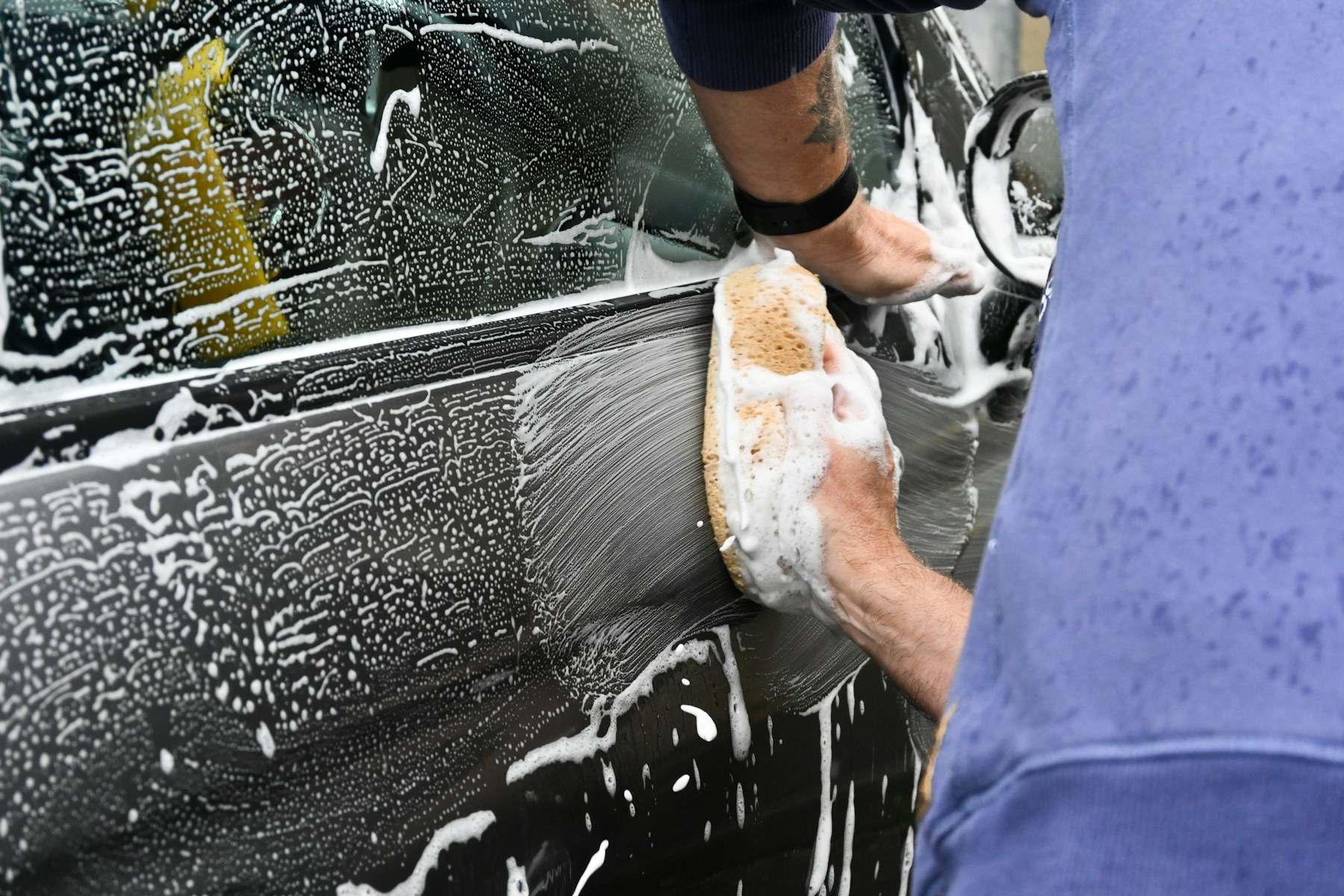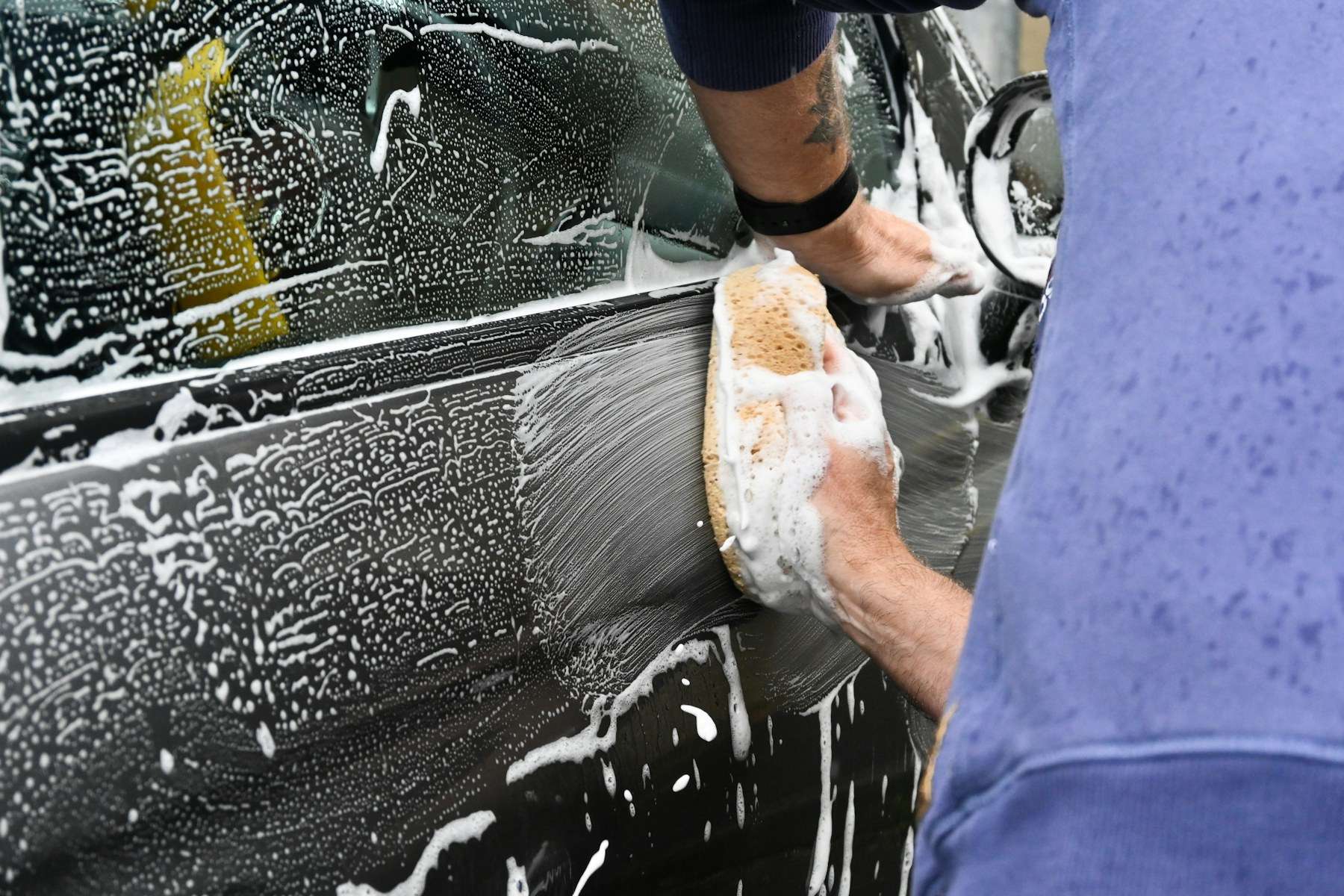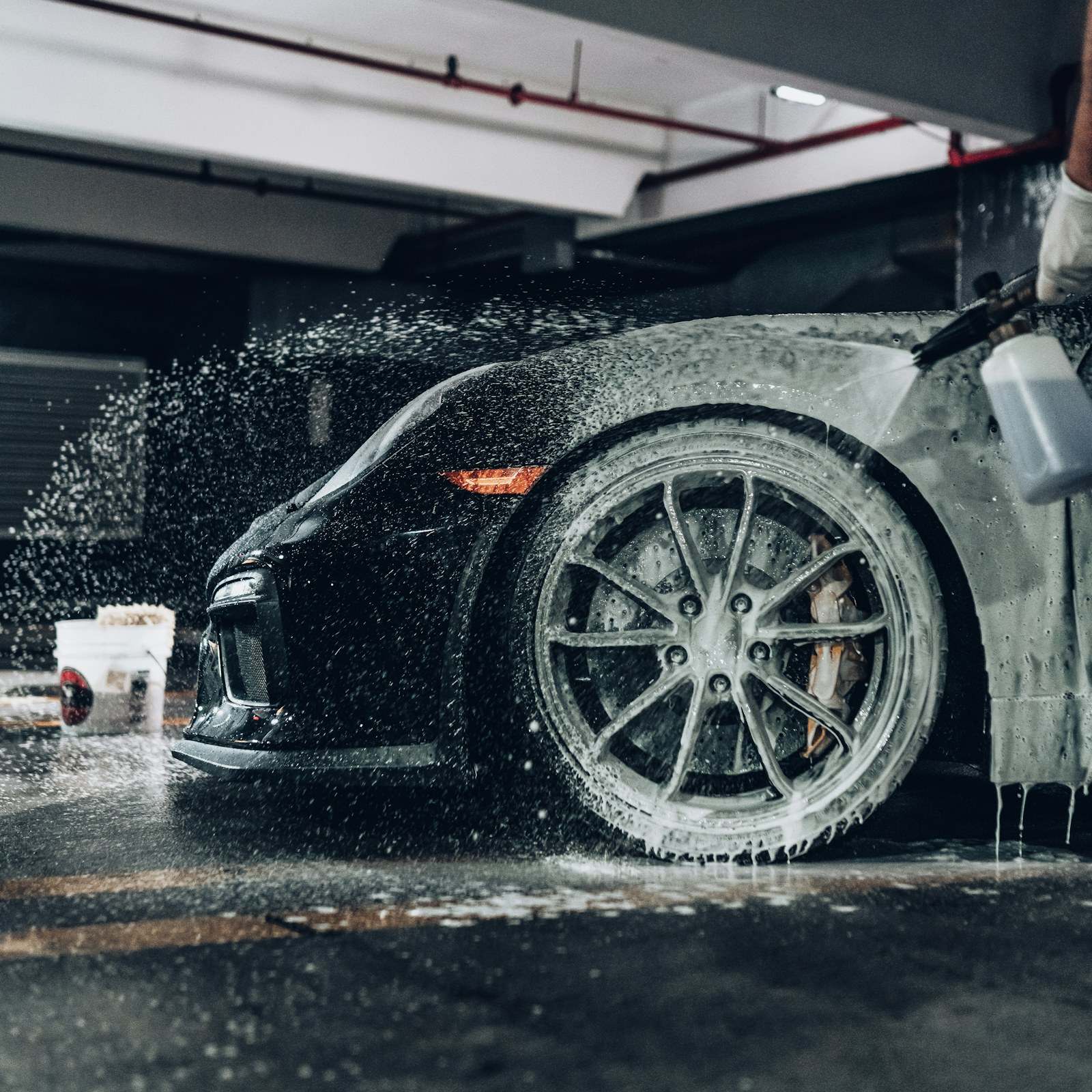
If you’ve ever watched a car disappear under a thick white blanket at a hand car wash, that’s a foam car wash at work. It looks like a show, but the foam has a real job: it does the first, dirtiest part of the wash before anyone touches your paint.
Here’s how it works, why it’s gentler on your car than a quick sponge-and-bucket wash, and when it’s worth choosing.
How a foam car wash works
A foam wash adds a pre-wash stage to a normal hand wash:
- Foam goes on first. A thick layer of foam is sprayed over the whole car, from the roof down to the wheels.
- It sits and soaks. Because the foam clings to the panels instead of running straight off, it has time to soften and loosen road film, dust, bugs and traffic grime.
- It’s rinsed away — taking a lot of that loosened grit with it.
- Then the car is washed by hand, dried, and finished.
At White Diamond, our Foam Wash is finished with a chamois dry, door jambs washed and dried, an interior vacuum and an air freshener.
Why foam is better for your paint
Most of the fine scratches you see on a car in direct sun — the circular “spider web” look called swirl marks — aren’t caused by the wash itself. They’re caused by grit being dragged across the paint during the wash.
The foam pre-soak helps in three ways:
- Less grit under the mitt. By the time the hand wash starts, much of the loose dirt has already been lifted off, so there’s less to drag around.
- Less scrubbing. Softened grime comes away with gentler strokes, which means less friction on the clear coat.
- Better coverage. Foam works its way into badges, grilles, wheel spokes and the lower sills — areas that collect the most grit and are easy to miss.
This matters most on dark paint, where swirl marks show up straight away, and on new or recently polished cars you want to keep looking that way.
What a foam wash can’t do
Foam is a great first step, but it isn’t magic. It won’t remove:
- Bonded contamination like tar spots, industrial fallout or old tree sap
- Existing scratches and swirl marks — those need machine or hand polishing
- Etched bird-dropping marks that have already eaten into the clear coat
If your paint feels rough to the touch or looks dull even when clean, a Deluxe Wash & Hand Polish (which includes a hand clay and polish) is the better choice.
Foam wash vs a regular hand wash vs an automatic
| Foam wash | Regular hand wash | Automatic tunnel | |
|---|---|---|---|
| Pre-soak to lift grit | ✓ | — | Sometimes |
| Washed by hand | ✓ | ✓ | — |
| Reaches badges, wheels & door jambs | ✓ | Mostly | Often missed |
| Risk of swirl marks | Lowest | Low–medium | Higher with brushes |
For a deeper comparison, see our guide to hand car washes vs automatic car washes.
Is snow foam worth it?
For most cars, yes. “Snow foam” is simply a thick foam designed to cling to the car rather than run off. Because it gives the cleaning solution time to work before the paint is touched, it’s worth it if:
- Your car has dark or recently polished paint that shows swirl marks
- The car is genuinely dirty — after rain, a road trip or a few weeks without a wash
- You want the wheels, grilles and lower panels cleaned properly, not just the flat surfaces
If your car is already clean and just dusty, the difference is smaller — but the foam step costs you nothing extra in time when someone else is doing the wash.
How often should you get a foam wash?
For most Sydney daily drivers, every one to two weeks keeps grime from building up. Go sooner if:
- Bird droppings, bugs or tree sap land on the paint (they can mark it quickly in summer heat)
- You’ve been to the beach or driven in heavy rain
- The car’s been parked under trees or near construction
We’ve written more about this in how often you should wash your car in Sydney.
Get a foam wash at White Diamond
Our Foam Wash is the wash we recommend for almost every car. It’s done by hand at all three locations, with the same price list everywhere and no bookings:
- Haberfield — Parramatta Road, open 24/7
- Belmore — Canterbury Road, open 24/7
- Guildford — Rawson Road, open 8am–10pm daily
Just drive in.